


Welcome to Antiquesmart.com !
"The new way to buy and sell old things!"
What would you like to do Today ?





List Item
Welcome to Antiquesmart.com !
"The new way to buy and sell old things!"
What would you like to do Today ?
List Item
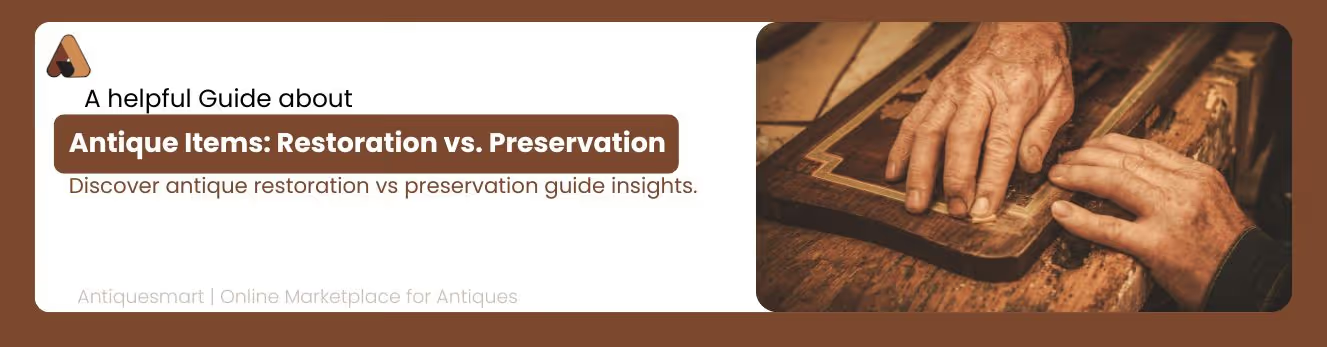
You’ve inherited an old family heirloom or picked up a stunning antique at a market—but now what? Do you restore it to look like new or preserve its weathered charm? That’s the question every antique owner faces, and it matters for value, history, and emotional connection. In this guide, you’ll learn how to make smart decisions that protect both price and personality of your treasured items.
Restoration actively repairs and returns an antique to a former state, while preservation focuses on maintaining current condition and preventing further deterioration. Choose preservation for historical value and original patina; choose restoration only when structural issues or intended use demand it.
Restoration involves returning an antique to an earlier state, often its original appearance or functionality. This may include repairing breaks, replacing missing parts, refinishing surfaces, or stabilizing worn areas. While it can enhance usability or aesthetics, it may also remove original materials or patina, which many collectors value highly.
When restoration might be chosen:
Professional restoration is a delicate craft—done well, it looks seamless and respectful of the item’s history.
Preservation is about maintaining an item as it currently exists, preventing further damage without altering its historical integrity. Works in museums and serious private collections emphasize this approach.
Preservation actions include:
Preservation lets patina and wear tell a story—and for many true antiques, that story adds significant value.
Conservation sits between preservation and restoration. It aims to stabilize an item to prevent deterioration without attempting to recreate a “like-new” look. Conservation commonly includes reversible cleaning, consolidation of surfaces, or pest treatment.
Original finishes, tool marks, and patina contribute to an object’s authenticity. Removing them can diminish both historical significance and collector appeal.
Highly original antiques—with age-related wear—often command premium prices. Many dealers agree that “patina is pedigree,” meaning original surfaces can outweigh cosmetic attractiveness.
Functional antiques may need careful restoration if they’re intended for regular use. Restoration can make heirlooms usable while trying to respect original materials where possible.
Even with good intentions, mistakes happen. Here are the most common ones—and how to avoid them:
Pitfall: Amateur fixes (wire brushes, modern glue) can cause irreparable harm.
Fix: Consult professional conservators or restorers for complex work.
Good care doesn’t just protect antiques—it protects their stories.
An early Victorian oak chair broke at the leg joint. The owner wanted it usable for daily seating. A professional conservator:
Outcome: A usable piece that maintained visual authenticity and avoided over-refinishing.
A collector owned a rare 19th-century table with original finish and patina. After expert evaluation:
Outcome: The table remained untouched in appearance, preserving its historical surface and maximizing collector value.
A porcelain plate from late 1800s had smoke and soot damage. Restoration included:
Outcome: The plate was stabilized and made safe for display without erasing age-related evidence.
A set of antique blacksmith tools showed rust but was structurally sound. Approach:
Outcome: Functional display pieces with original character, not over-restored.
To ensure accurate, practical guidance, the following research and verification steps were used:
Restoration and preservation are not competing choices—they’re strategic decisions that depend on the condition, purpose, and value of your antique. Understanding when to intervene and when to step back is what separates careful collectors from costly mistakes. Preserving originality often protects both historical significance and long-term value, while thoughtful restoration can extend usability when needed. The key is to approach every piece with respect for its story, not just its appearance. When in doubt, consult experts and prioritize decisions that are reversible and well-documented.
Download the Antiquesmart app for Iphone and Android
.avif)

Preservation maintains an item’s current condition and prevents further damage, while restoration actively returns it to a past appearance or state, often through repairs or replacements.
Not usually—originally preserved antiques with patina often fetch higher prices than heavily restored ones, especially if they’re rare or historically significant.
Control light and humidity, clean gently, avoid harsh chemicals, and consult professionals for structural issues. Simple preservation often outperforms aggressive restoration.
Patina is the natural aging surface on materials like wood and metal. It tells a history and is highly prized by collectors for authenticity and value.
Restoration is worth considering when structural damage affects usability, or previous poor work needs correction—but always with minimal intervention.
Download the Antiquesmart app for Iphone and Android