


Welcome to Antiquesmart.com !
"The new way to buy and sell old things!"
What would you like to do Today ?





List Item
Welcome to Antiquesmart.com !
"The new way to buy and sell old things!"
What would you like to do Today ?
List Item
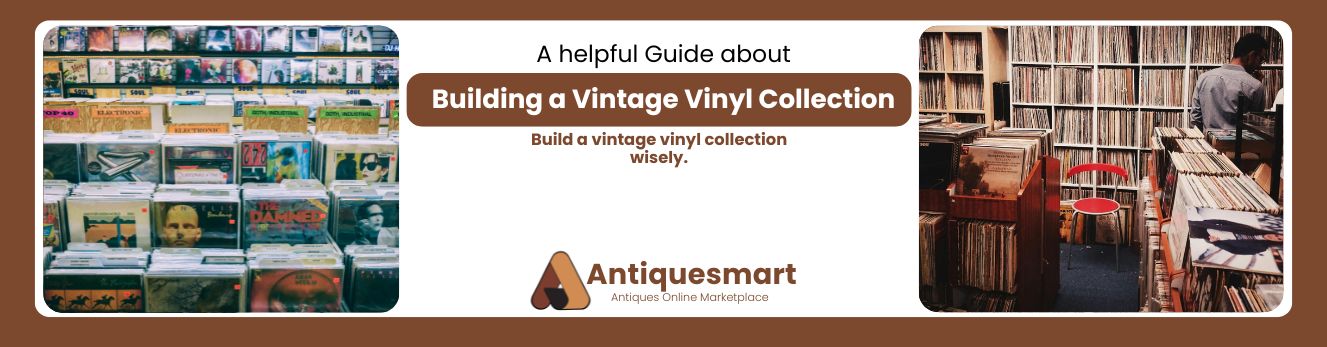
There is something about a vinyl record that no digital format has ever fully replicated. The ritual of sliding the sleeve from the cover, placing the record on the platter, dropping the needle into the groove, and hearing that first warm crackle before the music begins is an experience that connects you directly to every person who has played that same record in the decades since it was pressed. It is tactile, deliberate, and irreducibly physical in a world that has made music almost entirely invisible.
Vinyl collecting has experienced one of the most remarkable cultural revivals of the past two decades. Global vinyl record sales have grown for eighteen consecutive years. Independent record stores have multiplied. Pressing plants that once fell silent are running at capacity again. A generation that grew up with streaming services has discovered the pleasure of owning music as a physical object — and a generation of older collectors who never stopped buying records has watched the value of their collections climb steadily alongside renewed demand.
But vinyl collecting is not a simple hobby to navigate. The market is vast, the grading standards are specific, the condition variables are numerous, and the difference between a record worth $8 and the same title worth $800 can come down to a single pressing detail invisible to anyone who does not know what to look for. Fakes and counterfeits exist. Condition descriptions vary wildly between sellers. Storage mistakes that seem minor accumulate into irreversible damage over time.
This guide gives you a complete, practical framework for building a vintage vinyl collection intelligently — from understanding pressings and grading, to finding the best sources, to storing and caring for your records, to knowing which titles and genres offer the strongest combination of musical pleasure and long-term collecting value. Whether you are pressing your first record onto a budget turntable or expanding a collection built over decades, everything you need to collect vinyl well is here.
Before diving into the practical how-to, it is worth understanding what specifically distinguishes vintage vinyl from modern reissues and what drives serious collector interest and premium pricing.
The fundamental distinction in vinyl collecting is between an original pressing — a record manufactured during or very close to the original release period, from the original master recordings — and a reissue, which is a later pressing of the same album manufactured years or decades after the original release.
Original pressings are valued for several reasons:
Vintage vinyl collecting has a genuine investment dimension that few other collecting categories match in terms of accessibility and market liquidity. A first pressing of a significant album in excellent condition — a UK Parlophone Beatles pressing, an original Blue Note jazz pressing, a first US pressing of a canonical rock album — represents a tangible asset that has consistently appreciated in value over time and can be readily sold through a well-established global marketplace.
This does not mean every record in your collection will appreciate. The vast majority of vintage records have modest monetary value regardless of age. But building a collection with selective attention to significant pressings in excellent condition creates a collection with lasting financial as well as musical value.
Grading is the language of vinyl collecting, and understanding it fluently is essential for buying and selling records with confidence. Condition is the single most important factor in vinyl value — the same pressing in Mint condition can be worth ten or twenty times what the same pressing in Good condition brings.
The most widely used grading system in vinyl collecting is the Goldmine Grading Standard, which uses a scale from Mint (M) through Poor (P). Understanding each grade in precise terms protects you from paying Excellent prices for Very Good records or underselling your own collection.
Mint (M)Absolutely perfect in every respect. Unplayed, with no marks, scratches, or blemishes of any kind. The record and sleeve are indistinguishable from brand new. True Mint is extremely rare for vintage records and commands significant premiums. Many sellers use Mint loosely — demand specifics when the grade matters financially.
Near Mint (NM or M-)Nearly perfect. The record has been played but shows virtually no signs of wear. There may be the most minor signs of handling but no visible marks under light. The sleeve is crisp and essentially perfect. Near Mint is the highest grade realistically encountered for most vintage records and the grade at which serious collectors prefer to buy.
Very Good Plus (VG+)Shows some signs of play but retains most of its original luster. Light surface marks visible under direct light but not affecting playback significantly. Background noise is minimal. Sleeve may show minor wear at corners or edges. VG+ is the practical standard for desirable collectible records and represents the realistic ceiling for most vintage records found in the field.
Very Good (VG)Record has been played repeatedly and shows it. Visible marks and light scratches affect playback with some surface noise and occasional mild crackle. Sleeve shows wear, ring wear, or seam splits. VG records are suitable for playing and collecting but command significantly lower prices than VG+ examples. Serious collectors typically prefer VG+ or better for significant titles.
Good (G) and Good Plus (G+)Played heavily and shows significant wear. Surface noise is prominent throughout playback. Significant scratches, marks, and sleeve damage. Good grade records have modest monetary value for most titles but are sometimes acceptable as affordable listening copies of otherwise unobtainable titles.
Fair (F) and Poor (P)Severely damaged. Fair records may skip or be difficult to play. Poor records are essentially unplayable. Value is minimal for most titles at these grades.
Online marketplaces, particularly Discogs — the largest dedicated vinyl marketplace in the world — use a grading system largely consistent with Goldmine but with some platform-specific conventions. Always read the seller's specific condition notes rather than relying solely on the grade abbreviation, as individual interpretation of grades varies between sellers.
Not all pressings of the same album are equal in sound quality or collector value. Knowing how to identify original and desirable pressings is one of the most valuable skills a vinyl collector can develop.
The most reliable method for identifying a specific pressing is reading the matrix — the text hand-etched or stamped into the dead wax, the flat area between the last groove and the label. The matrix contains pressing plant codes, mastering engineer initials, and sequential pressing identifiers that allow precise identification of when and where a record was manufactured.
Learning to read matrix numbers for your specific collecting focus — whether that is Blue Note jazz, British rock, American soul, or any other genre — is an investment that pays continuous dividends. Resources including the Discogs database, the Steve Hoffman Music Forums, and pressing-specific reference guides document the matrix variations for thousands of significant titles.
Record label designs changed over time, and specific label variations are tied to specific pressing periods. For many classic titles, label variations are one of the primary identification tools for original versus reissue pressings.
Examples of label variation significance:
For many artists and genres, pressings from specific countries are considered superior to others for sound quality reasons tied to mastering and pressing plant practices.
Finding quality vintage vinyl at appropriate prices requires knowing where to look and how to evaluate what you find.
Independent record stores remain the most enjoyable and educational source for vintage vinyl. The best independent stores employ knowledgeable staff who can guide you toward significant pressings, alert you to recent arrivals, and provide honest condition assessments. Developing relationships with store owners and staff in your area provides ongoing access to good records before they reach the general market.
Record fairs — events where multiple dealers set up tables to sell vinyl — concentrate significant inventory in a single location and create an environment where comparative shopping and dealer conversation accelerate your education rapidly. Major record fairs in cities like London, New York, Chicago, and Tokyo attract international dealers and can yield exceptional finds.
Estate sales and house clearances are among the most productive sources for original pressings at below-market prices, simply because the sellers are not specialist record dealers and may not recognize the value of what they have. A collection assembled by an active music buyer in the 1960s and stored carefully in a climate-controlled environment for fifty years can yield extraordinary finds.
Thrift stores and charity shops remain productive hunting grounds for vinyl, particularly in areas with older populations. The inventory is unpredictable and the condition variable, but extraordinary finds — original pressings donated by estates or families clearing homes — occur regularly enough to justify regular visits. Developing a consistent thrifting routine in your area yields results over time that occasional visits do not.
The most satisfying vinyl collections are built with some degree of focus rather than acquired randomly across all genres and periods. Focus creates depth of knowledge, enables informed buying, and produces a collection with coherent character.
Original pressings of American jazz from the classic Blue Note, Prestige, Impulse, and Verve labels represent some of the most sought-after and financially significant vinyl in existence. An original Blue Note pressing of a canonical jazz title in VG+ condition can sell for hundreds to thousands of dollars. The knowledge required to identify genuine originals from later reissues is specific and learnable, and the collecting community around classic jazz vinyl is knowledgeable and active.
The Beatles, Rolling Stones, Led Zeppelin, Pink Floyd, Jimi Hendrix, and their contemporaries generate the broadest and most globally active collector market in vinyl. Original UK pressings of major titles from this era are consistently in demand and have appreciated significantly in value over time. The market is well documented, pricing is relatively transparent through Discogs and Popsike, and the collector community is enormous.
Original pressings of American soul and funk — Motown, Stax, Atlantic, and hundreds of independent labels — attract passionate collector communities and command strong prices for desirable titles in good condition. Northern Soul collecting, focused specifically on rare American soul 45s that became dance floor favorites in the UK, is one of the most specialized and price-intense corners of the entire vinyl market.
Original pressings of classic house, techno, jungle, and ambient electronic music — particularly on original independent labels from Chicago, Detroit, Berlin, and London — have become one of the fastest-growing segments of serious vinyl collecting, driven by both musical appreciation and scarcity of original pressings.
First pressings of canonical classical recordings on Mercury Living Presence, RCA Living Stereo, Columbia Masterworks, and early EMI and Decca labels are considered among the finest-sounding records ever made. Original copies in excellent condition command significant premiums from audiophiles as well as classical music collectors.
Correct storage is essential for maintaining both the playback quality and the monetary value of your vinyl collection. Many of the most common storage practices — stacking horizontally, storing in non-archival sleeves, keeping records in environments with temperature and humidity fluctuation — cause cumulative damage that cannot be reversed.
Vinyl records must always be stored vertically — standing upright like books on a shelf — never lying flat in horizontal stacks. Horizontal stacking causes warping as the weight of stacked records compresses the vinyl over time, permanently distorting the playing surface. A warped record typically cannot be fully corrected and plays with consistent pitch variation (wow) that ruins the listening experience.
The inner sleeve — the paper or plastic sleeve that holds the record itself — is the most important storage component for protecting playing surfaces.
Outer sleeves — the clear plastic sleeves that protect the album cover from wear, ring wear, and moisture — are essential for any collection intended to retain value.
Cleaning vinyl records before playing them reduces surface noise, extends stylus life, and preserves the playing surface from the embedding of grit and debris that causes permanent groove damage over time.
Dry Brush CleaningA carbon fiber record brush used before each play removes loose surface dust and debris in a single light pass. This is the minimum baseline cleaning practice for any vinyl collection.
Manual Wet CleaningA record cleaning brush designed for wet cleaning, used with a purpose-formulated record cleaning fluid (such as Nitty Gritty, Last, or MOFI cleaning solutions) applied to the record surface and removed with a lint-free cloth, provides significantly deeper cleaning than dry brushing alone.
Record Cleaning MachinesVacuum-based record cleaning machines — from entry-level manual machines to professional motorized units — are the most effective cleaning method available outside of ultrasonic cleaning. They apply cleaning fluid to the record surface and vacuum it away along with dissolved contamination, leaving a genuinely clean groove. For collectors serious about sound quality and preservation, a record cleaning machine is a worthwhile investment.
Ultrasonic Record CleaningUltrasonic record cleaning machines use high-frequency sound waves in a liquid bath to physically dislodge contamination from groove walls without mechanical contact. Once available only through specialist services, entry-level ultrasonic cleaners are now available for home use and represent the current state of the art in record cleaning technology.
Playing vintage vinyl correctly requires a turntable set up with appropriate care. Incorrect tracking force, a worn stylus, or a misaligned cartridge causes irreversible groove damage with every play.
For collectors at the beginning of their vinyl journey, these practical starting points build knowledge and collection simultaneously.
The most sustainable vinyl collections are built around genuine musical passion rather than purely financial calculation. Start by acquiring good copies of albums you already know and love — this builds a foundation of musical satisfaction while you develop the knowledge to pursue more significant acquisitions.
Rather than buying randomly across all genres, commit to learning one area deeply — the Blue Note catalog, original UK rock pressings, early soul 45s — before expanding. Deep knowledge of a specific area allows you to spot value, identify significant pressings, and avoid overpaying far more reliably than surface knowledge across many categories.
Before buying any record at a significant price, look it up on Discogs. Find the specific pressing you are considering, check the price history for that pressing in comparable condition, read the pressing notes and matrix information, and confirm you are paying an appropriate price for what you are buying.
The best records — significant pressings in excellent condition — rarely reach open marketplaces at reasonable prices. They are sold between collectors and through specialist dealers to known customers. Building relationships with specialist dealers in your collecting area gives you access to inventory before it becomes widely available.
Building a vintage vinyl collection is one of the most rewarding long-term pursuits available to any collector. It combines the pleasure of music — music heard at its best, through a format that rewards attentive listening — with the intellectual satisfaction of historical research, the thrill of the hunt, and the building of something genuinely valuable over time.
The collectors who build the best collections are those who invest in knowledge as consistently as they invest in records — who learn grading, understand pressings, use research tools intelligently, and approach the market with patience rather than impulse. They are the collectors who pass on records in as good condition as they found them, or better, because they understand that a well-maintained collection is both a personal pleasure and a shared cultural treasure.
Start with what you love. Learn deeply. Store correctly. And when you are ready to buy or sell significant pieces, Antiquesmart's growing community of collectors and specialist dealers is ready to connect you with the right records and the right buyers.
Download the Antiquesmart app for Iphone and Android
.avif)

Original pressings were cut from first or second generation master tapes before tape degradation, used higher quality vinyl formulations, and represent the historical artifact of the album's original release. They consistently offer superior sound quality and carry scarcity premiums that reissues — available in effectively unlimited quantities — cannot match.
Read the matrix — the text etched into the dead wax between the last groove and the label. Matrix codes identify the pressing plant, mastering engineer, and pressing sequence. Also examine the label design and catalog format, which changed across pressing generations for most major labels. The Discogs database documents pressing variations for millions of titles and is the most accessible research tool for pressing identification.
The Goldmine Grading Standard — ranging from Mint through Poor — is the most widely used system in the English-speaking vinyl collecting world. Discogs uses a compatible system for online buying and selling. Always read the seller's specific condition notes in addition to the grade abbreviation, as individual interpretation varies.
Always store records vertically — never in horizontal stacks, which cause warping. Use anti-static polyethylene inner sleeves and polypropylene outer sleeves to protect playing surfaces and covers. Maintain stable conditions of 65–70°F and 45–55% relative humidity, away from direct sunlight, heat sources, and temperature extremes.
Significant original pressings in excellent condition — particularly in jazz, classic rock, and soul — have consistently appreciated in value over time alongside growing global collector demand. However, the vast majority of vintage records have modest monetary value. Investment potential is concentrated in specific titles, pressing variants, and condition grades rather than vintage vinyl generally.
Discogs is the largest dedicated vinyl marketplace with the most comprehensive pressing database and price history. eBay offers auction format buying and global reach. Antiquesmart is a growing community marketplace for vintage and antique collectibles including vinyl. For price research, Popsike's database of completed auction results is invaluable before making any significant purchase.
Download the Antiquesmart app for Iphone and Android